Showing posts with label Festivals Of India. Show all posts

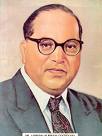
Dr. B R Ambedkar

="Dr

B. R. Ambedkar

Alternate name(s): Baba Saheb
Date of birth: 14 April 1891
Place of birth: Mhow, Central Provinces, British India
Date of death: 6 December 1956
Place of death: Delhi, India
Movement: Buddhist movement
Major organizations: Samata Sainik Dal,Independent Labour Party, Scheduled Castes Federation, Buddhist Socity Of India ,Republican Party of India,
Religion: Buddhism
Influences Buddha · Kabir · Mahatma Phule · Moses · Jesus · Ashoka · Shivaji · George Washington · Thomas Paine · Abraham Lincoln · Thomas Jefferson · Edmund Burke · Martin Luther · Brooker T. Washington · Shahu Maharaj · Maharaja Sayajirao Gaekwad III · Constitution of the United States of America · Indian Constitution · American Revolution · French Revolution · October Revolution · Tripitaka · Dhammapada
Influenced A H Salunkhe · Chhagan Bhujbal · Prakash Ambedkar · Chiranjeevi · Mayawati · Surai Sasai · Buddhist movement · Annabhau Sathe · Kanshiram · Wamanrao Godbole · Sohanlal Shastri · Ram Vilas Paswan · D.K.Khaparde · Sant Gadge Baba

Maharashtra Day

Maharashtra Day on May 1 is celebrated in Maharashtra, a state on western coast of India. Maharashtra attained statehood on 1st of May, 1960 when the then state Bombay state was divided into two states, Maharashtra and Gujarat on the basis of different languages, Marathi and Gujarati, under the Saurashtra re-organization act. Maharashtra retained old capital Bombay, which was later renamed Mumbai.


Celebrated On : 1st May
Significance : State of Maharashtra attained statehood
State was formed in : 1960


1st May is celebrated as Maharashtra day. On this day the state of Maharashtra attained statehood. Maharashtra is one of the largest states in India, both in terms of population and area. Its booming capital Mumbai, makes it not only one of the most important states, economically, but also a major gateway for overseas visitors.
The present state was formed in 1960 when the Marathi and Gujarati linguistic areas of the former Bombay state were separated. Bombay then became the capital of the new state. In independent India, Bombay, the bilingual state, continued as one state consisting of Maharashtra and Gujarat. But this equation of two linguistic units in one state did not work and therefore on 1st May 1960, under the Bombay re-organization Act, Maharashtra and Gujarat were divided into separate states. Maharashtra retained the old capital Bombay. Shiv Sena Government has renamed the capital city Bombay into Mumbai.
In Mumbai, the Maharashtra Day celebrations are held at the Shivaji Park in central Mumbai. The governor of the state takes the salute at the ceremonial parade, comprising members of the state reserve police force, Brihanmumbai Commando Force, home guards, civil defence, fire brigade and city police.

Enter your email address:
Delivered by FeedBurner

April Fool Special

April_Fool
April Fools Day or All Fools’ Day is a day celebrated in many countries on April 1. The day is marked by the commission of hoaxes and other practical jokes of varying sophistication on friends, family members, enemies, and neighbors, or sending them on a fool’s errand, the aim of which is to embarrass the gullible. Traditionally, in some countries, such as the UK, Australia, Canada and South Africa the jokes only last until noon, and someone who plays a trick after noon is called an “April Fool”. Elsewhere, such as in France, Ireland, Italy, Japan, Russia, The Netherlands, Brazil, and the U.S., the jokes last all day. The earliest recorded association between April 1 and foolishness can be found in Chaucer’s Canterbury Tales (1392). Many writers suggest that the restoration of January 1 as New Year’s Day the 16th century was responsible for the creation of the holiday, but this theory does not explain earlier references.


We bring you the gift ideas for April Fools' Day, the history, traditions and customs of this fun celebration, April Fools' Day special recipes, the arts and crafts for the day and some really interesting and hilarious sections for you. You will really enjoy the quotes on April Fools' Day, fools and foolishness and may even have the real fun by playing pranks suggested by us. Our pranks are easy-to-do and not too dangerous, keeping in with the spirit of April Fools' Day. But before you start exploring the contests, read about the 'one -million-dollar-contest' we are offering you. The button is on the right hand side or may be the left hand side. APRIL FOOL!

Hanuman Jayanti Special

About Hanuman Jayanti
Hanuman_MaktMin

Yatra yatra raghunatha kirtanam;
Tatra tatra kritha masthakanjalim;
Bhaspavaari paripurna lochanam;
Maarutim namata raakshasanthakam
   Meaning : "We bow to Maruti, Sri Hanuman, who stands with his palms folded above his forehead, with a torrent of tears flowing down his eyes wherever the Names of Lord Rama are sung".
   Sri Hanuman is worshipped all over India-either alone or together with Sri Rama. Every temple of Sri Rama has the murti or idol of Sri Hanuman. Hanuman is the Avatara of Lord Shiva. He was born of the Wind-God and Anjani Devi. His other names are Pavanasuta, Marutsuta, Pavankumar, Bajrangabali and Mahavira.
   He is the living embodiment of Ram-Nam. He was an ideal selfless worker, a true Karma Yogi who worked desirelessly and dynamically. He was a great devotee and an exceptional Brahmachari or celibate. He served Sri Rama with pure love and devotion, without expecting any fruit in return. He lived to serve Sri Rama. He was humble, brave and wise. He possessed all the divine virtues. He did what others could not do-crossing the ocean simply by uttering Ram-Nam, burning the city of Lanka, and bringing the sanjeevini herb and restoring Lakshmana to life again. He brought Sri Rama and Lakshmana from the nether world after killing Ahiravana.
   He had devotion, knowledge, spirit of selfless service, power of celibacy, and desirelessness. He never boasted of his bravery and intelligence.
   He said to Ravana, "I am a humble messenger of Sri Rama. I have come here to serve Rama, to do His work. By the command of Lord Rama, I have come here. I am fearless by the Grace of Lord Rama. I am not afraid of death. I welcome it if it comes while serving Lord Rama."
   Mark here how humble Hanuman was! How very devoted he was to Lord Rama! He never said, "I am the brave Hanuman. I can do anything and everything."
   Lord Rama Himself said to Sri Hanuman, "I am greatly indebted to you, O mighty hero! You did marvellous, superhuman deeds. You do not want anything in return. Sugriva has his kingdom restored to him. Angada has been made the crown prince. Vibhishana has become king of Lanka. But you have not asked for anything at any time. You threw away the precious garland of pearls given to you by Sita. How can I repay My debt of gratitude to you? I will always remain deeply indebted to you. I give you the boon of everlasting life. All will honour and worship you like Myself. Your murti will be placed at the door of My temple and you will be worshipped and honoured first. Whenever My stories are recited or glories sung, your glory will be sung before Mine. You will be able to do anything, even that which I will not be able to!"
   Thus did Lord Rama praise Hanuman when the latter returned to Him after finding Sita in Lanka. Hanuman was not a bit elated. He fell in prostration at the holy feet of Lord Rama.
   Lord Rama asked him, "O mighty hero, how did you cross the ocean?"
   Hanuman humbly replied, "By the power and glory of Thy Name, my Lord."
   Again the Lord asked, "How did you burn Lanka? How did you save yourself?"
   And Hanuman replied, "By Thy Grace, my Lord."
   What humility Sri Hanuman embodied!
   His birthday falls on Chaitra Shukla Purnima (the March-April full moon day).
   On this holy day worship Sri Hanuman. Fast on this day. Read the Hanuman Chalisa. Spend the whole day in the Japa of Ram-Nam. Sri Hanuman will be highly pleased and will bless you with success in all your undertakings.
An example of a perfect Sevak: Lord Maruti presented an example of a perfect sevak. As a result, many embodied souls attained Final Liberation by following the same path i.e. Dasyatva. Due to His humility only He was able to narrate the good qualities of Lord Rama to Ravan and when Ravan denigrated Lord Rama, Maruti burnt Lanka and returned safely.
Glory to Hanuman! Glory to his Lord, Sri Rama!
Read One Time to Have the Pleasure of Hanuman and try to be just like that. !
Rama Navami

Ram bhagwan

Images of Rama (center), with consort Sita and brother Laxman
Observed by Hinduism
Type Birth day of Rama; Marriage day of Rama with Sita
Ends Chaitra Navami, Ninth day of Chaitra month
Date April
2009 date April 03
Celebrations 1 - 9 days
Observances puja, vrata (fast) and feasting
Related to Rama Sita

Ram Navami (IAST Rāma-navamī) (Devanāgarī: राम नवमी) is a Hindu festival, celebrating of the birth of Lord Rama, son of King Dasharatha of Ayodhya, and a divine figure in Hinduism believed to be an incarnation of Lord Vishnu]. The day also known as Sri Rama Navami, falls on the Navami, ninth day of the Chaitra month of Hindu lunar year in 'Shukla paksha' or waxing moon, thus named Chaitra Masa Suklapaksha Navami, and marks the end of nine-day Chaitra-Navratri celebrations.
At some places the festival lasts, the whole nine days of the Navratras, thus the period is called 'Rama Navratra' . Rama is the hero of the Hindu epic, Ramayan, it is marked by continuous recitals, Akhand Paath, mostly of the Ramacharitamanas, organized several days in advance to culminate on this day, with elaborate bhajan and kirtan singing, and distribution of prasad after the puja and aarti. Images of baby Rama are placed on cradles and rocked by devotees. Since Lord Rama is believed to have born at noon, temples and family shrines are elaborately decorated and traditional prayers are chanted together by the family in the morning. Also, at temples special havan (yajna) are organized, along with chanting of Vedic mantras and offerings of fruits and flowers. Many Hindus mark this day by Vrata (fasting) through the day followed by feasting in the evening, or at the culmination of celebrations . In South India, the day is also celebrated as the wedding anniversary of Rama and his consort Sita, thus ceremonial wedding ceremonies, Sitarama Kalyanam, of the celestial couple are held at temples throughout the region, with great fanfare and accompanied by group chanting of name of Rama, Rama nama smaranam .
The important celebrations on this day take place at Ayodhya in Uttar Pradesh, Bhadrachalam in Andhra Pradesh and Rameswaram in Tamil Nadu, thronged by thousands of devotees, and Rathayatras, the chariot processions, also known as Shobha yatras of Rama, his wife Sita, brother Lakshmana and devotee Hanuman, are taken out at several places including Ayodhya where thousands of people take a dip in the sacred river Sarayu

Gudi Padwa

MaktMin Gudi Padwa

A Gudhi is erected on Gudhi Padwa
Observed by Hinduism
Type Maharashtraian's New year's Day
Begins Chaitra
Date March/ April
2009 date March 27
Celebrations 1 day

Gudhi Padwa (Devnagari: गुढीपाडवा {often mis-pronounced as guDi padwa because ढी sounds like डी while speaking}) is celebrated on the first day of the Chaitra month, and is celebrated as New Year's Day by Maharashtrians and Hindu Konkanis ( called as Samvatsar Padvo[1] or Yugadi by Konkanis ). It is the same day on which great king Shalivahana defeated Sakas in battle.
This is also first day of Marathi Calendar. This festival is supposed to mark the beginning of Vasant (spring). According to the Gregorian calendar this would fall sometime at the end of March and the beginning of April. According to the Brahma Purana, this is the day on which Brahma created the world after the deluge and time began to tick from this day forth. This is one of the 3 and a half days in the Indian Lunar calendar called "Sade-Teen Muhurt", whose every moment is considered auspicious in general to start a new activity.
While the people of Maharashtra use the term Gudhi Padwa for this festival and the Konkanis use Sanvsar Padvo (sanvsar derived from samvatsar meaning year) the people of Andhra Pradesh and Karnataka term the same festival, observed on the same day, Ugadi. The Sindhi festival of Cheti Chand is celebrated same day.

Holika Dahan: The Holi bonfire


The main emphasis of the festival is on the burning of the holy fire or Holika. The origin of the traditional lighting of Holi is attributed by some to the burning of demonesses like Holika, Holaka and Putana who represent evil, or to the burning of Madan according to others.
Traditionally a bonfire on the day of Holi, marks the symbolic anhilation of a demoness Holika the sister of demon, Hiranyakashipu, in Hindu mythology, while trying to kill, a devotee, Bhakta Prahlad [3].
This is akin to other festivals where effigies are burned, like Ravana Dahan on Vijayadashami (Dusshera) day, also in many other religions across the world, signifying end of dark or demonic forces, though with Holika Dahan, the effigy has now been all but vanished or present in a symbolic form, except in few areas in the Braja region, where effigies are still seen on street corners and public squares, piled on top of an assemblage wood. This set to fire after ritualistic worship, and people make pradakshina of the bonfire. The next day this victory is celebrated as the day of Dulhendi.
In some practices particularly in the UK, coconuts are thrown into the fire and then pulled out. The burnt husk of the coconut represents Holika who died in the pyre. The white inside represents Prahlad, who was still alive and unaffected by the pyre.


Dulhendi

Principal ingredients of celebration are Abeer and Gulal, in all possible colours. Next comes squirting of coloured water using pichkaris. Coloured water is prepared using Tesu flowers, which are first gathered from the trees, dried in the sun, and then ground up, and later mixed with water to produce orange-yellow coloured water. Another traditional Holi item now rarely seen is a where a red powder enclosed in globes of Lakh, which break instantly and covering the party with the powder.

Maha Shivaratri

Maha Shivratri or Maha Sivaratri or Shivaratri or Sivaratri (Night of Shiva or "Great Night of Shiva") is a festival celebrated every year on the 13th night/14th day in the Krishna Paksha (waning moon) of the month of Maagha (as per Shalivahana or Gujarati Vikrama) or Phalguna (as per Vikrama) in the Hindu Calendar (that is, the night before and day of the new moon). The festival is principally celebrated by offerings of Bael (Bilva) leaves to the Lord Shiva, all day fasting and an all night long vigil. Cannabis is traditionally used as an offering for Lord Shiva and his followers.
Per scriptural and discipleship traditions, the penances are performed in order to gain boons in the practice of Yoga and meditation, in order to reach the goal more swiftly and avoid rebirth.


Observed by Hindus in general and Shaivites in particular
Type Hindu
Date February/March
2010 date February 12
Observances Fasting, worship of Lingam

Shiva's Favourite Day
After creation was complete, Parvati asked Lord Shiva which rituals pleased him the most. The Lord replied that the 13th night of the new moon, during the month of Maagha, is his most favourite day. Parvati repeated these words to her friends, from whom the word spread over all creation.


The Story Of King Chitrabhanu


In the Shanti Parva (chapter) of the Mahabharata epic, Bhishma, whilst resting on the bed of arrows and discoursing on Dharma (righteousness), refers to the observance of Maha Shivaratri by King Chitrabhanu. The story goes as follows:
Once upon a time King Chitrabhanu of the Ikshvaku dynasty, who ruled over the whole of Jambudvipa (India), was observing a fast with his wife, it being the day of Maha Shivaratri. The sage Ashtavakra came on a visit to the court of the king.
The lord asked the king the purpose of his observing the fast. King Chitrabhanu explained that he had a gift of remembering the incidents of his past birth, and in his previous life he had been a hunter in Varanasi and his name was Suswara. His only livelihood was to kill and sell birds and animals. The day before the new moon, while roaming through forests in search of animals, he saw a deer, but before his arrow flew he noticed the deer's family and their sadness at its impending death. So he let it live. He had still not caught anything when he was overtaken by nightfall and climbed a tree for shelter. It happened to be a Bael tree. His canteen leaked water, so he was both hungry and thirsty. These two torments kept him awake throughout the night, thinking of his poor wife and children who were starving and anxiously waiting for his return. To pass away the time he engaged himself in plucking the Bael leaves and dropping them down onto the ground.
The next day he returned home and bought some food for himself and his family. The moment he was about to break his fast a stranger came to him, begging for food. He served the food first to stranger and then had his own.
At the time of his death, he saw two messengers of Lord Shiva, sent to conduct his soul to the abode of Lord Shiva. He learnt then for the first time of the great merit he had earned by unconscious worship of Lord Shiva during the night of Shivaratri. The messengers told him that there had been a Lingam (a symbol for the worship of Shiva) at the bottom of the tree. The leaves he dropped had fallen on the Lingam, in imitation of its ritual worship. The water from his leaky canteen had washed the Lingam (also a ritual action), and he had fasted all day and all night. Thus, he unconsciously had worshipped the Lord.
As the conclusion of the tale the King said that he had lived in the abode of the Lord and enjoyed divine bliss for long ages and now he was reborn as Chitrabhanu.
This story is also told in the Garuda Purana.

Gandhi Jayanti


Gandhi Jayanti is a National Holiday celebrated in India to mark the occasion of the birthday of Mahatma Gandhi, the "Father of the Nation". He was born on October 2, 1869. Hence Gandhi Jayanti is celebrated every year on the 2nd of October. It is one of the three official declared National Holidays of India and is observed in all Indian states and union territories. The United Nations General Assembly announced on 15 June 2007 that it adopted a resolution which declared that the 2nd of October will be celebrated as the International Day of Non-Violence.[1]
On this day, in India, liquor is neither sold nor consumed in his honour.


Family
Kasturba · Harilal · Manilal · Ramdas · Devdas · Samaldas · Arun · Rajmohan · Tushar · Gopalkrishna